
Better-Trained Harvest Operators Are Key to More Sawlog Without Planting a Single Tree
A Gottstein Fellowship took NSW harvesting specialist Damien Petfield 2,500 kilometres through Sweden and Finland to learn how they train their forest machine operators.

Damien Petfield (right) talking with harvest operator Roger Huber at the controls, at Rosin's harvest contracting operation in Tumut, NSW.
Australia’s harvesting crews could recover 94,000 more cubic metres of softwood sawlog a year from the trees they already fell, with just a 1 per cent lift worth $9 million to the country. That is according to a new Gottstein Fellowship report by Damien Petfield of Forestry Corporation of NSW, who writes that “if we want more value from the same estate, we need the best operators.”
The Fellowship, awarded in 2025, gave him the chance to “step away from day-to-day operations” and spend two weeks in what he calls “the forestry mecca” of Sweden and Finland. Petfield’s hosts ranged from Sveaskog, Sweden’s largest forest owner, to Finland’s Valtimo forestry college, which he says is often seen as the gold standard for forestry training.
“Forest thinning is a craft that requires 100 per cent focus and takes several years to master. The total cognitive load is comparable to that of a fighter pilot,” Lars Svensson, CEO of Nordic Forestry Automation, said in 2023.
“No licence or nationally mandated training is needed to run a harvester or forwarder in Australia.”
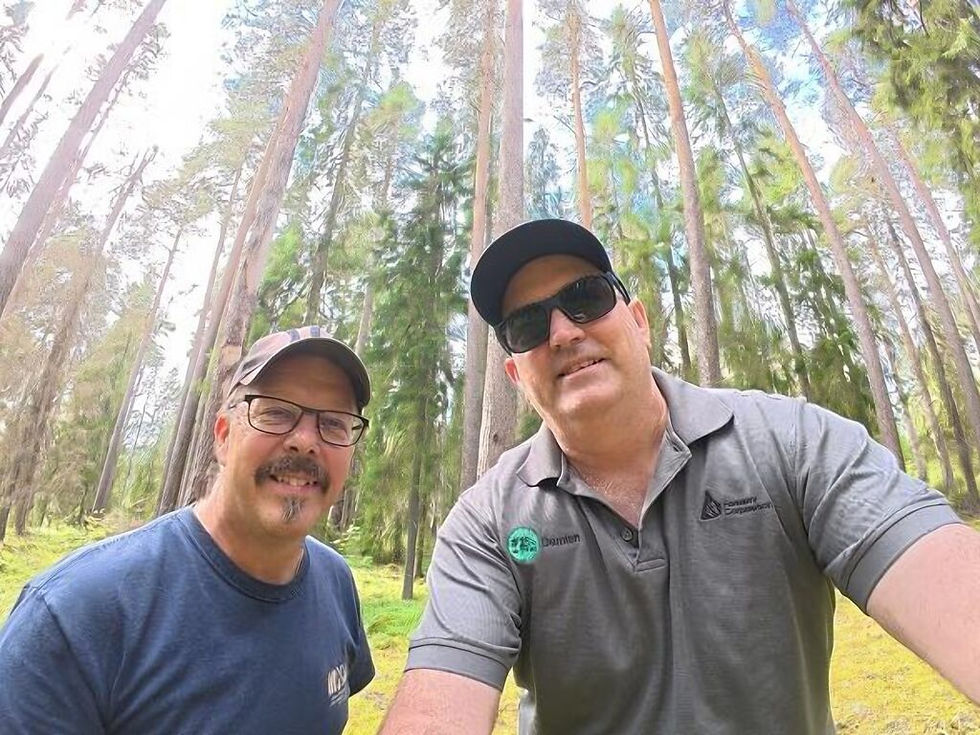
Damien Petfield and Sveaskog’s Jonas Gustafsson in the Kings Forest reserve at Skinnskatteberg in central Sweden. (Photo Credit: Damien Petfield/Gottstein Trust)
Harvesting contractors bear the cost instead, with several telling the survey Petfield ran with the Australian Forest Contractors Association that each entry-level recruit costs between $40,000 and $60,000 to train. That often leaves one of a contractor’s best operators producing less whilst training someone, with respondents rating how well harvesting contracts support training at just 2.55 out of 10.
Output can vary by 40 per cent between an average operator and a top one, which Petfield calls “too big a gap to ignore.” As it stands, he writes, quality operators are “essential to commercial success” in a “tight supply environment.”
His answer is a compulsory national harvesting operator ticket by 2028, which would formalise the Safe and Skilled competencies the industry signed up to in 2021. Ticketed operators would also complete at least one day of professional development a year, which Petfield says would give training providers enough work to invest in better trainers.
To get there, Petfield wants forest growers to form an Australian Forest Grower Training Group and roll out mobile training modules costing $60 per user a year. He also wants machinery makers to adapt their simulators to Australian forests, with John Deere telling him 10 days on its TimberSkills simulator can take a trainee to level three of five.
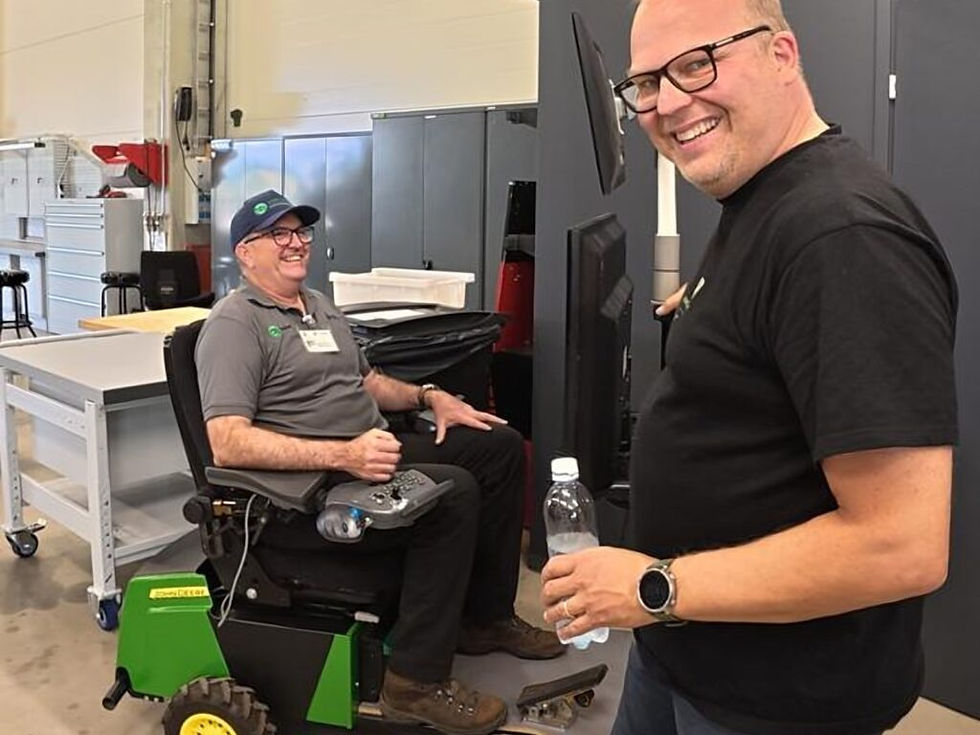
Damien Petfield tries out the John Deere harvesting simulator at the company’s head office in Tampere, Finland, with Simo Tujula (right), John Deere digital solutions and operator training specialist. (Photo Credit: Damien Petfield/Gottstein Trust)
Industry should also investigate a national training school, Petfield argues, where trainees learn on simulators and real machines under a grower contract that takes away the pressure to produce. Failing that, he suggests regional centres in the major plantation states, where trainees would record their hours in a diary much like a learner driver.
Valtimo trains 250 students a year on 25 simulators and 30 forestry machines, according to Petfield, with school-age students spending three years on the course. Tommi Anttonen of Riveria, the public provider that runs the college, told Petfield that the €40,000 per student it needs annually is becoming harder to raise.
It comes as 36 per cent of respondents had never heard of the Safe and Skilled charter, even though 83 per cent said its competencies mattered to their business. Respondents also scored their confidence in registered training organisations at just 3.82 out of 10, with 24 per cent reporting none at all.
Hosts from Trimble and Ponsse have since visited Tumut in southern NSW, and Petfield says the relationships built on the tour are “opening doors to opportunities.” He now plans an annual online catch-up with his Nordic contacts and wants a future tour to include more growers and contractors, as well as a visit to a Swedish training school.
Gottstein Fellowships fund original projects for anyone working in or associated with Australia’s forest and wood products industries, with most involving travel within Australia or overseas. Petfield thanked the Trustees for “backing a practical industry project that matters to growers, contractors, operators and the future capability of Australian forestry.”
Applications for this year’s round close at midnight in less than three weeks, alongside Skills Development Grants, open to anyone in the value chain, and Scholarships for TAFE and university students. The Trust encourages anyone considering a Fellowship to talk through their project idea with the Gottstein management team before lodging their application.


Comments