
Australian Timber Gets New Watchdog for Dumping and Import Surges
A new law will let the Anti-Dumping Commission recommend emergency tariffs when imports suddenly flood in, a change the timber union has sought for more than a decade.

Export logs wait on a tropical foreshore as a bulk carrier lies at anchor in a file image of the timber trade. Federal Parliament voted on 17 September to move Australia's safeguard inquiries, which test whether a surge of imports is seriously injuring a local industry, to a renamed Anti-Dumping Commission. (Photo Credit: Alamy Stock Photo, image CR8NA4)
Timber, furniture, and textile workers will have a new weapon against wood products shut out of the United States and Canada, after Federal Parliament passed laws handing a renamed Anti-Dumping Commission the job of investigating import surges. That is according to the Timber, Furnishing and Textiles Union, which said on Thursday that the vote caps a campaign of more than a decade.
“When the US, Canada, the EU, China and other major economies shut products out of their markets, those goods don’t disappear,” said Leo Skourdoumbis, the union’s acting national secretary.

Leo Skourdoumbis, acting national secretary of the Timber, Furnishing and Textiles Union, who says goods shut out of the world’s major economies are diverted elsewhere and can leave Australia “in the firing line.” (Photo Credit: Supplied by TFTU)
Skourdoumbis warned that diverted goods can leave Australia “in the firing line” and blamed the old system for the loss of “too many good Australian jobs.” Those investigations, known as safeguard inquiries, have sat with the Productivity Commission under an arrangement he dates to the Howard Government in 1998.
The union pushed for the change with the Australian Manufacturing Workers’ Union and the Australian Workers’ Union. Skourdoumbis says the new laws use rights Australia already holds under the World Trade Organization’s Agreement on Safeguards.
Canada placed a provisional 25 per cent safeguard surtax on certain imported wood cabinets and vanities from 31 July, the example the union holds up for Australia. Finance Minister François-Philippe Champagne announced the surtax, which runs for up to 200 days, with his department citing “harmful trade diversion.” Ottawa asked the Canadian International Trade Tribunal to open its inquiry in April, with a report due by 15 January 2027.
“Australia’s commitment to open and rules-based trade is unwavering,” Trade Minister Don Farrell said on Thursday. The Albanese Government will rename the Anti-Dumping Commission the Australian Trade Remedies Commission under the Customs Amendment (Safeguard Inquiries) Bill 2026. Dumping, subsidy, and safeguard cases will go before that one body, which reports through Industry Minister Tim Ayres.
The Commission already investigates claims that goods are dumped in Australia at unfairly low prices or subsidised by foreign governments. It will now run the safeguard inquiries the Government refers to it and recommend whether measures are imposed. Farrell and Ayres describe safeguards as short-term measures for imports that jump without warning and seriously hurt, or threaten to hurt, a local industry.

Sawn merbau stacked and tally-numbered at a timber yard in a file image. The imported tropical hardwood is widely used in Australian decking and flooring. (Photo Credit: Bony Maria/Dreamstime.com)
One safeguard inquiry is still open at the Productivity Commission, Australia’s authority for them under World Trade Organization rules. It found on 3 September that an Australian Steel Institute application, lodged in November 2025, did not meet the conditions for provisional safeguards.
Growth in fabricated structural steel imports was “broadly in line with longer-term trends,” Commissioner Catherine de Fontenay said. The Commission counted an average rise of 6 per cent a year across the five years to 2024-25. Submissions on the steel findings close on 30 September, with a final report due to the Albanese Government in November.
Richard Hyett, acting chief executive of the Australian Forest Products Association, warned after the vote that the renamed Commission needs “adequate resources to fulfil its expanded remit.” The association used a submission on the Bill to argue that industries hurt by imports need a plain route to bring cases to the new body.
Australia’s last structural timber dumping case ended in April 2012 without a single duty imposed. Hyett’s association is now working with the Commission on an application over Russian wood glued into laminated veneer lumber in China, which he says could take 12 to 18 months. Declared imports of the product grew 63 per cent in a year, Forest and Wood Products Australia says, with mainland China supplying more than 69 per cent of the volume.
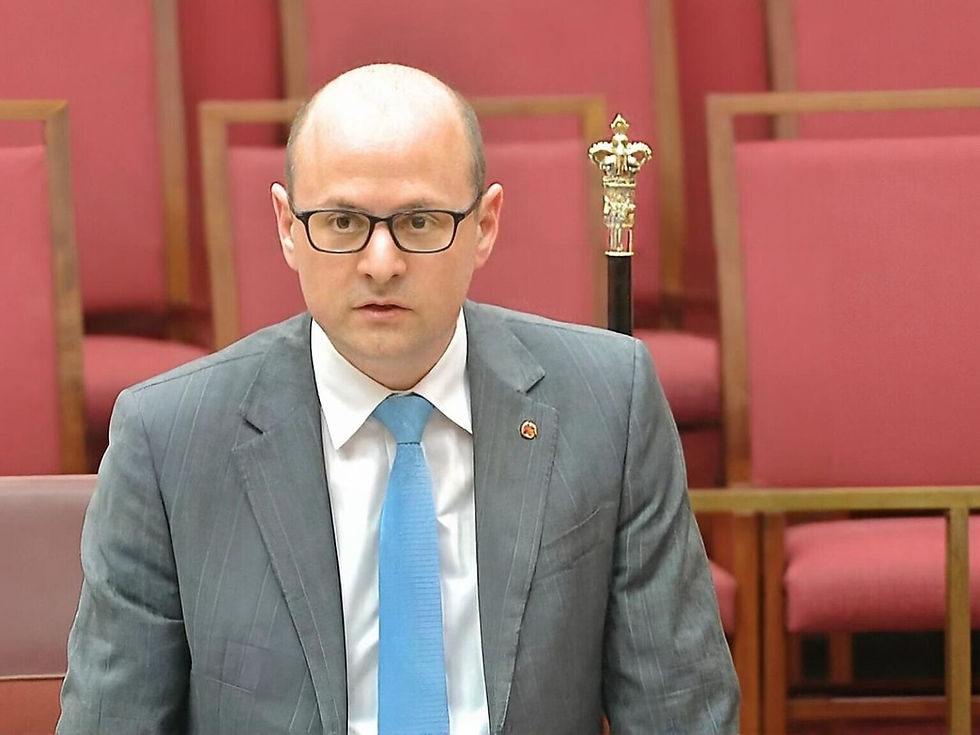
Raff Ciccone speaks in the Senate in a file image. The deputy chair of the Senate’s Foreign Affairs, Defence and Trade References Committee encouraged the timber industry in August to take Russian laminated veneer lumber to the Commission that will now investigate import surges. (Photo Credit: Parliament of Australia)
“Ultimately, we’ve got to use the mechanisms that are at our disposal,” Raff Ciccone told ABC’s NSW Country Hour on 27 August. The Labor senator and deputy chair of the Senate’s Foreign Affairs, Defence and Trade References Committee had encouraged the timber industry to apply to the Commission in comments tabled on 20 August.


Bình luận